


Celebrating Community, Conservation, and Cranes at the 2026 Othello Sandhill Crane Festival

Each spring, the skies above the Columbia Basin come alive with the calls of migrating sandhill cranes, a powerful reminder of the region’s role in supporting wildlife and habitat. The 2026 Othello Sandhill Crane Festival once again brought together community members, conservation partners, and visitors from across the Pacific Northwest to celebrate this incredible migration.

Held in and around Othello, the festival offered a full schedule of activities designed to connect people with the natural landscapes of the Columbia Basin. From guided birding tours at sunrise to educational workshops and family-friendly events, attendees had the opportunity to experience firsthand the beauty and importance of local ecosystems.
A highlight of the festival each year is the chance to witness Sandhill Crane migrations. Thousands of cranes stop in the region during their journey north, drawing bird enthusiasts and photographers eager to catch a glimpse of these iconic birds in flight. Alongside cranes, participants also observed a wide variety of waterfowl and other migratory species that rely on the Basin’s habitats.

The Columbia Basin Conservation District (CBCD) was proud to once again play an active role in this meaningful event through outreach, education, and guided experiences. Throughout the festival, CBCD staff connected with community members at our booth, answering questions about conservation initiatives and cost-share programs that benefit both local landowners and the environment.
One of the highlights of CBCD’s involvement was leading two guided hikes on Saturday, March 21st. Led by Education and Outreach Program Manager Kaley Wisher and Conservation Director Dinah Rouleau, these hikes gave participants a firsthand look at how agriculture and wildlife habitat intersect across the Columbia Basin landscape.

Hosted on an irrigated farm, the hikes explored how plant buffers and riparian zones provide essential cover and food for birds and pollinators. Participants learned how different farming practices can positively or negatively impact wildlife habitat on working lands. Along the trail, guides shared the history of irrigation projects that transformed the region, as well as ongoing efforts to balance water use for both agricultural production and ecosystem health.
Attendees also observed how shrubs, grasses, and wetlands support native wildlife, including deer, coyotes, otters, and waterfowl. These discussions highlighted how habitat restoration efforts not only enhance biodiversity but also contribute to improved soil health and long-term sustainability. Through observation and conversation, participants gained a deeper appreciation for the interconnected nature of agriculture and ecology in the Columbia Basin.
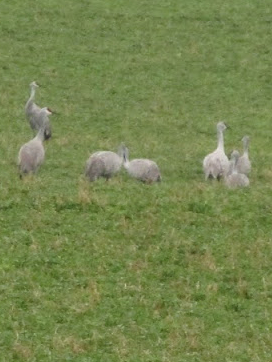

Left: Sandhill Cranes, photo thanks to Lyle Stoltman. Right: Indira Kulkarni, CBCD Conservation Planner, sharing conservation resources at the CBCD booth
In addition to the hikes, CBCD staff participated in the popular morning fly-in bus tour. Project Manager Wade Haughton and Program Manager Griffin Hansen served as agricultural guides, sharing insights into local farming practices and conservation efforts while participants experienced the spectacle of cranes taking flight at sunrise.
Beyond tours and presentations, the festival fostered a strong sense of community. Families, students, landowners, and visitors came together to learn, share experiences, and celebrate a shared appreciation for the Columbia Basin’s unique environment.
As another successful festival comes to a close, the 2026 event serves as a reminder of what can be achieved when communities come together around conservation. CBCD is grateful to be part of this annual tradition and looks forward to continuing its work to support healthy landscapes, thriving agriculture, and resilient ecosystems across the Columbia Basin.


Comments